The 2025 WAIC: What I Saw, Heard, and Thought
No longer limited to conversational chats, AI agents are now capable of autonomously understanding complex instructions, utilizing tools, and completing a series of tasks. For instance, Ant Digital's financial reasoning large model, Agentar-Fin-R1, can handle complex business logic such as risk control and auditing. This signifies that AI is transitioning from being a "consultant" to a "digital employee" capable of delivering work.
AI has acquired a "body" and begun interacting with the physical world. The bipedal service robot XMAN-F1 from Qinglang Technology adeptly made popcorn and prepared beverages at the venue. Such human-like operations offer an intuitive sense of the震撼 of AI technology in practical application. The humanoid robot unveiled by Shanghai Electric also demonstrated its ability to autonomously identify and transport items in an industrial environment.
However, multiple experts emphasized that the global risks associated with AI require global collaboration to address. Professor Xue Lan from Tsinghua University suggested establishing "safety zones" for cooperation, starting with pilot programs in specific fields like autonomous driving and public health. Academician Zhang Yaqin, a foreign member of the Chinese Academy of Engineering, stated unequivocally that it is essential to ensure AI systems operate as intended, without malicious tampering, and proposed the creation of a global AI safety research fund. This reflects that, beyond technological competition, cooperation and shared governance have become an indispensable consensus.
The focus for companies is no longer on the parameter scale of their models, but on the tangible benefits they can deliver in specific scenarios. This marks the industry's gradual maturation. In the future, the greatest demand may not be for pure AI algorithm experts, but for复合型人才 who possess both AI technical skills and deep industry knowledge. They are the key bridge transforming technology into productivity.
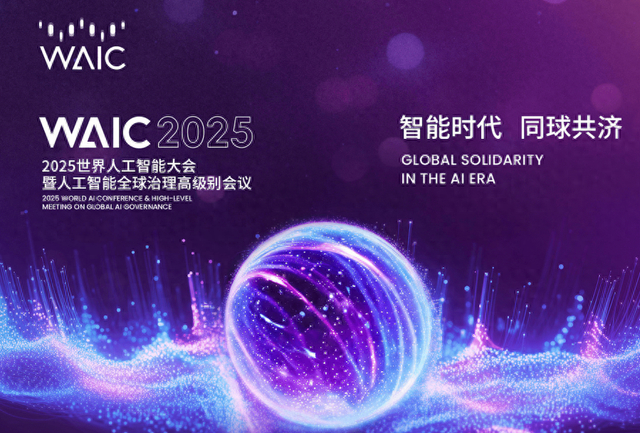
This conference also signifies the official emergence of Eastern-style artificial intelligence onto the world stage, announcing the rise of Chinese AI. When Geoffrey Hinton posed the philosophical question, "Can human intelligence be simulated?" during the main forum, and when UN Secretary-General António Guterres called for global collaboration via video message, WAIC 2025 transcended the scope of a mere technology exhibition, becoming a forum for negotiating the rules of intelligent civilization. At this moment, China demonstrated unprecedented ambition in governance. The Chinese government presented a visionary proposal to the world: the establishment of a World Artificial Intelligence Cooperation Organization, with its headquarters preliminarily considered for Shanghai. This historic initiative marks China's historic transition from a "participant" to a "rule-definer" in the realm of global AI governance. China is now pooling global resources with an open and inclusive posture, weaving a grand tapestry for the AI ecosystem. It aims to be not merely a convergence point for technology, but a rule-maker and a leader of the future.
