China's "AI Plus" Initiative: Driving the Development of New Quality Productive Forces
Leveraging China's strengths in abundant data resources, a comprehensive industrial system, and vast application scenarios, we will strengthen forward-looking planning, systematic organization, sector-specific policies, open sharing, and security controls. Focusing on key areas such as technology, industry, consumption, people's livelihoods, governance, and global cooperation, we will deeply implement the "AI Plus" initiative. This will foster the emergence of new infrastructure, technological systems, industrial ecosystems, and job opportunities, accelerating the cultivation and development of new quality productive forces. The benefits of AI development will be shared by all people, better serving the modernization drive of China.

(I) "AI+" in Science and Technology
1. Accelerating the Pace of Scientific Discovery. Expedite the exploration of new scientific research paradigms driven by AI, accelerating the process of achieving "from 0 to 1" major scientific discoveries. Accelerate the development and application of large scientific models, promote the intelligent upgrade of basic research platforms and major sci-tech infrastructure, create open and shared high-quality scientific datasets, and enhance the capability to process complex, cross-modal scientific data. Strengthen AI's cross-disciplinary driving and catalyzing role, promoting the integrated development of multiple disciplines.
2. Driving Innovation and Efficiency in R&D Models. Promote the integrated and coordinated development of AI-driven technology R&D, engineering implementation, and product commercialization, accelerating the "from 1 to N" deployment, iteration, and breakthrough of technologies, and facilitating the efficient translation of innovative achievements. Support the promotion and application of intelligent R&D tools and platforms. Strengthen coordinated innovation between AI and technologies in fields like bio-manufacturing, quantum technology, and the Sixth Generation Mobile Communication (6G), using new scientific research results to support the implementation of application scenarios and leveraging new application demands to drive breakthroughs in scientific and technological innovation.
3. Innovating Research Methods in Philosophy and Social Sciences. Promote the shift in research methodologies in philosophy and social sciences towards human-machine collaboration, explore the establishment of new research organizational forms in philosophy and social sciences adapted to the AI era, and broaden research perspectives and observational horizons. Conduct in-depth research on the profound impact of AI on human cognition, judgment, ethical norms, and its underlying mechanisms, explore and form a theoretical system for ensuring AI alignment with human values, and promote the use of AI for the greater benefit of humanity.
(II) "AI+" in Industrial Development
1. Cultivating Intelligent-Native New Models and Business Forms. Encourage eligible enterprises to integrate AI into strategic planning, organizational structure, business processes, etc., to promote the intelligent development of all industrial factors, facilitate the transformation and upgrading of traditional industries, and open up new tracks for strategic emerging industries and future industries. Vigorously develop intelligent-native technology, product, and service systems, accelerate the cultivation of a group of intelligent-native enterprises whose underlying architecture and operational logic are based on AI, explore entirely new business models, and catalyze new intelligent-native business forms.
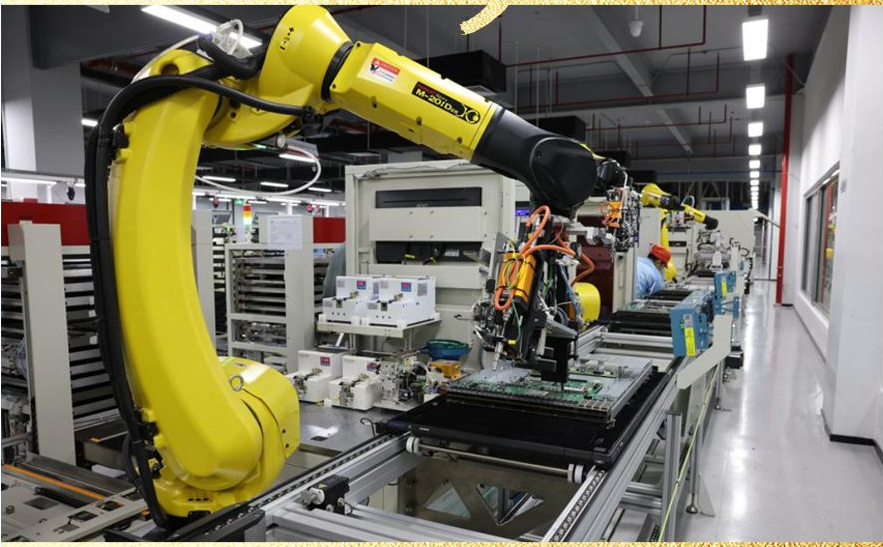
2. Promoting Intelligent Development of All Industrial Factors. Promote the intelligent linkage of all industrial factors, and accelerate the application of AI throughout all stages: design, pilot testing, production, service, and operation. Focus on enhancing the AI literacy and skills of all personnel, promoting the formation of more reusable expert knowledge across various industries. Accelerate breakthroughs in industrial software innovation and vigorously develop smart manufacturing equipment. Promote intelligent collaboration in industrial supply chains, strengthening adaptive supply-demand matching. Promote AI-driven methods for production process optimization. Deepen the integrated application of AI and the Industrial Internet, enhancing the intelligent perception, decision-making, and execution capabilities of industrial systems.
3. Accelerating the Digital and Intelligent Transformation of Agriculture. Accelerate innovation in AI-driven breeding systems and support intelligent applications in agricultural sectors such as planting and aquaculture. Vigorously develop intelligent equipment like smart agricultural machinery, agricultural drones, and agricultural robots, improving the capabilities of agricultural production and processing tools in intelligent perception, decision-making, control, and operation, and strengthening the platform-based and intelligent management of agricultural machinery and tools. Enhance the application of AI in areas like agricultural production management and risk prevention, helping farmers improve their production, management capabilities, and skill levels.
4. Innovating New Models for Service Industry Development. Accelerate the evolution of the service industry from digitally-enabled internet services to new, intelligently-driven service modes, expand business scope, and promote the modern service industry towards intelligent and innovative development. Explore new models that combine unmanned services with human services. In fields such as software, information, finance, business, law, transportation, logistics, commerce, and trade, promote the widespread application of new-generation smart terminals and intelligent agents.
(III) "AI+" in Consumption Upgrade
1. Expanding New Service Consumption Scenarios. Cultivate intelligent service formats with broader coverage and richer content, accelerate the development of efficiency-enhancing, companion-type, and other intelligent-native applications, and support the creation of new service entry points like intelligent assistants. Strengthen the construction of intelligent consumption infrastructure, enhance the quality of life services such as entertainment, e-commerce, home services, property management, transportation, elderly care, and child care, and expand new service consumption scenarios like experiential consumption, personalized consumption, and cognitive/emotional consumption.
2. Fostering New Product Consumption Formats. Promote the "Intelligent Connectivity of All Things" for smart terminals, cultivate smart product ecosystems, vigorously develop new-generation smart terminals like intelligent connected vehicles, AI-powered phones and computers, intelligent robots, smart homes, and wearable devices, creating an integrated, fully scenario-covered intelligent interactive environment. Accelerate the integration of AI with technologies like the metaverse, low-altitude flight, additive manufacturing, and brain-computer interfaces, along with product innovation, to explore new forms of intelligent products.
(IV) "AI+" in People's Livelihood and Well-being
Creating Smarter Ways of Working. Proactively leverage AI's role in creating new jobs and empowering traditional roles, explore new organizational structures and management models based on human-machine collaboration, and cultivate and develop innovative work forms like intelligent agents, promoting their application in roles facing labor shortages or high-risk environments. Vigorously support AI skills training, stimulating vitality for AI innovation, entrepreneurship, and re-employment. Strengthen employment risk assessment related to AI application, guide innovation resources towards areas with greater job creation potential, and mitigate negative impacts on employment.
Implementing More Effective Learning Methods. Integrate AI into all elements and the entire process of education and teaching, innovate new human-machine collaborative education models like intelligent learning companions and AI teachers, shift the focus of education from knowledge transmission to competency development, accelerate the realization of large-scale personalized education, improve education quality, and promote educational equity. Build intelligent scenario-based interactive learning models, promoting more flexible and resource-rich self-directed learning. Encourage and support all citizens in actively learning new AI knowledge and technologies.
Building a Higher Quality of Life. Explore and promote high-level personal health assistants accessible to everyone, orderly promote the application of AI in scenarios like assisted diagnosis and treatment, health management, and healthcare insurance services, significantly improving the capability and efficiency of primary healthcare services. Promote a greater role for AI in enriching cultural production, enhancing cultural dissemination, and fostering cultural exchange, using AI to assist in creating more cultural content with Chinese cultural elements and identifiers, and strengthening the cultural industry. Fully leverage AI's important role in weaving closer interpersonal relationships, providing spiritual comfort and companionship, supporting elderly/childcare and disability assistance, promoting national fitness, and expand AI applications throughout the entire lifecycle of "quality housing," actively building a warmer, more caring intelligent society.
(V) "AI+" in Governance Capability
1. Pioneering a New Vision of Human-Machine Coexistence in Social Governance. Orderly promote the intelligent transformation and upgrading of municipal infrastructure, explore urban planning, construction, and governance tailored for the development of new-generation smart terminals, and enhance the intelligence level of urban operations. Accelerate the extension of AI products and services to rural areas, promoting universal and equitable access to intelligent technologies in both urban and rural settings. Deepen the conduct of AI social experiments. Safely, prudently, and orderly advance the application of AI in the government sector, creating new models of government services that accurately identify needs, proactively plan services, and enable fully intelligent processing. Accelerate the application of AI in various types of public resource bidding and tendering activities, enhancing intelligent transaction services and regulatory oversight.
2. Forging a New Pattern of Multi-stakeholder Co-governance in Safety and Security. Promote the construction of an integrated public safety and security governance system encompassing natural persons, digital humans, intelligent robots, and other entities. Strengthen the application of AI in workplace safety supervision, disaster prevention, mitigation, and relief, public security early warning, and social order management, improving capabilities in monitoring and early warning, regulatory enforcement, command and decision-making, on-site rescue, and social mobilization. Enhance the ability to utilize AI for safeguarding and shaping national security. Accelerate efforts to empower cyberspace governance with AI, strengthening capabilities in precise information identification, proactive situational analysis, and real-time risk disposal.
3. Co-creating a New Picture of Ecological Governance for a Beautiful China. Improve the level of integrated dynamic perception of land, sea, air, and space and the intelligent planning of national land space, optimizing the allocation of resources and factors. Focusing on multi-element ecological environment systems (e.g., atmosphere, water, marine, soil, biology) and the construction of the national carbon market, enhance AI-driven capabilities for monitoring and forecasting, simulation and scenario modeling, and problem handling, promoting the establishment of intelligently coordinated and precise governance models.
(VI) "AI+" in Global Cooperation
1. Promoting Inclusive and Shared AI Benefits. Treat AI as an international public good for the benefit of humanity, fostering an open ecosystem for AI capacity building that is egalitarian, mutually trusting, diverse, and win-win. Deepen high-level opening up in the AI field, promote the open-source availability and accessibility of AI technologies, strengthen international cooperation in areas such as computing power, data, and talent, help Global South countries enhance their AI capacity building, assist all countries in participating equally in the intelligent development process, and bridge the global AI divide.
2. Co-building the Global AI Governance System. Support the United Nations in playing a central role in global AI governance, explore the formation of a governance framework with broad participation from all countries, and jointly address global challenges. Deepen exchanges and cooperation with international organizations and professional institutions, and enhance the alignment and coordination of governance rules and technical standards. Jointly study, judge, and proactively address AI application risks to ensure that AI development is safe, reliable, and controllable.
III. Strengthening Foundational Support Capabilities
(VII) Enhancing Foundational Model Capabilities. Strengthen fundamental AI theoretical research, support multi-path technological exploration, and innovate model architectures. Accelerate research into more efficient model training and inference methods, actively promoting the coordinated development of theoretical, technological, and engineering innovation. Explore new forms of model application, enhance complex task processing capabilities, and optimize the interactive experience. Establish and improve model capability evaluation systems to promote effective iterative improvement of model capabilities.
(VIII) Strengthening Data Supply and Innovation. Be application-oriented and continuously enhance the construction of high-quality AI datasets. Improve data property rights and copyright systems adapted for AI development, and promote the lawful and compliant opening of copyright content formed by publicly funded projects. Encourage exploration of data cost compensation and revenue sharing methods based on value contribution to strengthen incentives for data supply. Support the development of technologies like data annotation and data synthesis, and foster and expand the data processing and data services industry.
(IX) Strengthening the Coordination of Intelligent Computing Power. Support breakthroughs and innovation in AI chips and the cultivation of enabling software ecosystems, accelerating technological breakthroughs and engineering implementation in ultra-large-scale intelligent computing clusters. Optimize the national layout of intelligent computing resources, improve the nationwide integrated computing power network, fully leverage the role of national hubs in the "East Data West Computing" project, and enhance the coordination of data, computing, power, and network resources. Strengthen the interoperability and supply-demand matching of intelligent computing power, innovate operational models for intelligent computing infrastructure, encourage the development of standardized and scalable computing power cloud services, and promote intelligent computing power supply that is universally accessible, easy to use, cost-effective, efficient, green, and secure.
(X) Optimizing the Application Development Environment. Plan and establish a number of national AI application piloting and testing bases, building common platforms for industry applications. Promote the intelligent transformation of software and information service enterprises, reshaping product forms and service models. Cultivate AI application service providers, develop "Model-as-a-Service," "Agent-as-a-Service," etc., to build an AI application service chain. Improve guidelines for AI application scenario construction, openness evaluation, and incentive policies, and refine management systems for application trial and error tolerance. Strengthen intellectual property protection, transfer, and collaborative application. Accelerate the development of AI standards in key fields, promoting cross-industry, cross-domain, and international standard alignment.
(XI) Promoting a Prosperous Open-Source Ecosystem
Support the development of artificial intelligence open-source communities, promote the aggregation and open sharing of models, tools, datasets, etc., and cultivate high-quality open-source projects. Establish and improve evaluation and incentive mechanisms for open-source contributions in AI, and encourage universities to include open-source contributions in student credit recognition and faculty achievement assessment. Support enterprises, universities, research institutions, etc., in exploring new models for universal and efficient open-source application. Accelerate the building of a globally open open-source technology system and community ecosystem, and develop open-source projects and development tools with international influence.
(XII) Strengthening the Talent Team Development
Advance AI education across all academic stages and general AI education for the whole society, improve the layout of academic disciplines and majors, increase the cultivation of high-level talent, use extraordinary measures to build new models for cultivating leading talents, strengthen the teaching faculty, and promote the integration of industry and education, interdisciplinary training, and international cooperation. Improve a diversified evaluation system that aligns with the professional attributes and job characteristics of AI talent, better utilize the role of leading talents, provide greater scope for young talent to施展才能, and encourage active exploration of the AI "uncharted territory." Support enterprises in standardizing the use of medium to long-term incentives such as equity and options to attract, retain, and utilize talent.
(XIII) Strengthening Policy, Legal, and Regulatory Safeguards
Improve the systems for evaluating performance and monitoring risks related to state-owned capital investment in the AI field. Increase financial and fiscal support for the AI field, develop and strengthen long-term capital, patient capital, and strategic capital, improve risk-sharing and investment exit mechanisms, and fully leverage the role of policies involving fiscal funds and government procurement. Improve AI laws, regulations, and ethical guidelines, and advance legislative work related to the healthy development of AI. Optimize safety assessment and filing management systems related to AI.
(XIV) Enhancing Safety and Security Capabilities
Promote the development of security capabilities for model algorithms, data resources, infrastructure, and application systems, guard against risks arising from model black boxes, hallucinations, algorithmic discrimination, etc., strengthen prospective assessment, monitoring, and disposal, and promote the compliance, transparency, and trustworthiness of AI applications. Establish and improve monitoring, risk early warning, and emergency response systems for AI technology, strengthen government guidance and industry self-discipline, adhere to an inclusive and prudent approach with classification and grading, and accelerate the formation of a dynamic, agile, and multi-stakeholder coordinated AI governance landscape.
