2026 Guide to Purchasing Chinese Robots, Drones and Automation Equipment Overseas
2026 Guide to Purchasing Chinese Robots, Drones and Automation Equipment Overseas
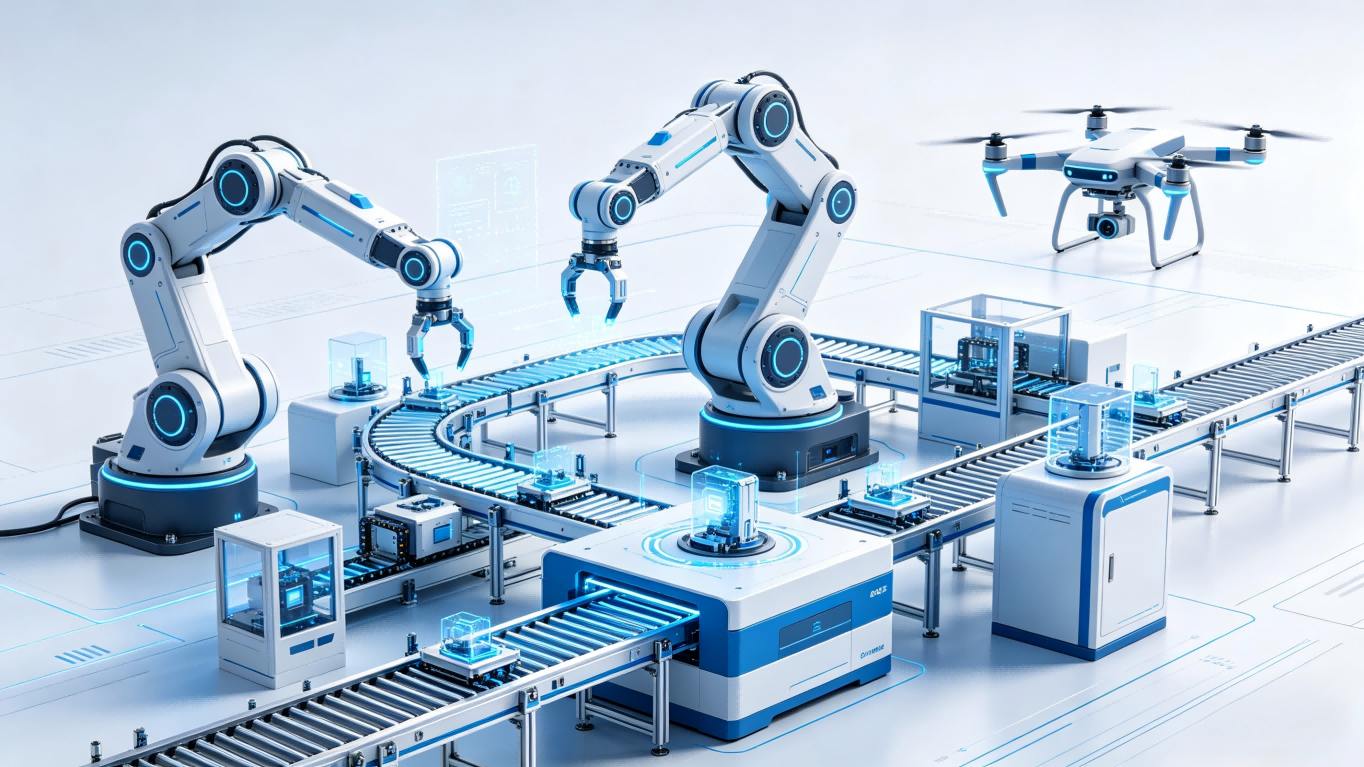
In 2026, China's intelligent equipment industry has entered a mature period of high-quality development. With advantages such as advanced technology, high cost-performance and a complete industrial chain, Chinese robots, drones and automation equipment have become the preferred solutions for overseas enterprises to upgrade their industries. This guide systematically sorts out key points of each link to provide you with actionable operational guidance.
Market Overview — Why Choose Chinese Intelligent Equipment in 2026?
Core Advantages of Chinese Intelligent Equipment
Chinese intelligent equipment has formed significant competitive advantages in the global market, mainly reflected in four aspects that precisely match the core needs of overseas procurement:
High cost-performance: Relying on China's complete industrial chain (from core components such as motors and controllers to final assembly), the production cost of Chinese intelligent equipment is 30%-50% lower than that of similar European, American and Japanese products. For example, six-axis industrial robots with the same load and precision are about 40% cheaper than European brands; industrial drones cost 35%-45% less than American brands, which can greatly reduce corporate procurement budgets.
Advanced technology and mature quality: In recent years, China has increased R&D investment in intelligent equipment, and technology has been continuously iterated. At present, Chinese industrial robots, collaborative robots and industrial drones have reached the international medium-to-high end in terms of precision, stability and intelligence. Many enterprises have obtained international certifications such as CE, FCC and ROHS, and their product quality is stable and reliable. For instance, Chinese collaborative robots achieve millisecond-level response speed, and industrial drones are equipped with long-endurance and high-precision positioning functions, adapting to various industrial scenarios.
Complete product categories: Chinese intelligent equipment covers almost all application scenarios. Robots include industrial robots (handling, welding, assembly), collaborative robots, service robots (medical, logistics), etc.; drones are divided into industrial-grade (plant protection, power inspection, security) and consumer-grade with rich models; automation equipment includes automated production lines, CNC machine tools, intelligent sorting equipment, etc., meeting the procurement needs of automobile, electronics, agriculture, logistics and other industries.
Flexible customization and fast delivery: Chinese suppliers have strong flexible production capacity and can customize products according to enterprises' specific needs (such as adjusting robot arm length, drone flight parameters, and automation equipment process flow). Meanwhile, relying on a complete supply chain, the delivery cycle is short — 4-8 weeks for standard products and 8-12 weeks for customized products, shorter than the 12-20 weeks cycle of European and American suppliers, helping equipment to be put into use quickly.
Accelerated intelligent upgrading: Chinese intelligent equipment is deeply integrated with artificial intelligence (AI) and the Internet of Things (IoT). For example, robots can realize autonomous path planning and fault self-diagnosis, and drones can complete intelligent data analysis and real-time transmission, helping enterprises improve production efficiency.
Green and environmental protection orientation: In response to the global "carbon neutrality" goal, Chinese suppliers have launched energy-saving and low-carbon intelligent equipment, which not only complies with environmental policies of various countries but also helps enterprises reduce energy consumption and operating costs.
Increased policy support: The Chinese government has continuously introduced export support policies, such as raising the export tax rebate rate (the tax rebate rate for core products such as robots and drones has been increased to 16%), optimizing cross-border e-commerce logistics, and providing subsidies for enterprises' R&D and international certification, indirectly reducing procurement costs and improving procurement efficiency.
Tight supply of core components: Affected by the global supply chain and China's export control policies on gallium and germanium, the supply of core components (chips, motors, etc.) of intelligent equipment may be tight in 2026. It is recommended to lock in suppliers in advance and sign long-term supply agreements to avoid supply interruptions.
Supplier Screening — How to Select Reliable Chinese Suppliers?
Preliminary Screening
First, collect potential suppliers through multiple channels, then conduct preliminary screening based on basic conditions to eliminate unqualified suppliers. Supplier collection channels include:
Professional exhibitions: Large-scale exhibitions such as the China International Industry Fair (CIIF) and Shenzhen International Intelligent Equipment Exhibition gather a large number of formal suppliers, where you can communicate on site, check samples and understand their strength.
Cross-border e-commerce platforms: Formal cross-border platforms such as Alibaba International and Made-in-China have a large number of Chinese intelligent equipment suppliers settled in. The platforms have certain supervision over suppliers, which can reduce fraud risks.
Industry associations and third-party institutions: China Intelligent Equipment Industry Association and third-party consulting institutions can provide qualified supplier lists and evaluation reports, helping to quickly lock in potential partners.
Product quality is the core of procurement, which can be evaluated through the following methods:
Require suppliers to provide product inspection reports, sample specifications and user cases (prioritize overseas enterprise cases in the same industry).
Apply for sample testing to verify whether product parameters and performance meet standards.
Understand suppliers' R&D strength (scale of R&D team, annual R&D investment, number of patents) to ensure later technical support and product upgrades.
Price is an important factor but not the only one. It is necessary to compare the cost-performance of different suppliers:
Obtain detailed quotations from 3-5 suppliers, including additional costs such as product price, packaging fee and transportation fee.
Compare the total cost of ownership of each supplier, taking into account procurement price, after-sales maintenance cost, spare parts price and equipment service life.
Negotiate with suppliers for better price discounts (bulk procurement, long-term cooperation, etc.) and clarify the price adjustment mechanism (such as fluctuations in raw material prices).
Delivery capacity directly affects enterprise production plans and needs key attention:
Confirm the supplier's delivery cycle (standard products, customized products) and whether it meets the delivery time requirements.
Check the supplier's supply chain management capacity, such as core component supply, production scheduling, and emergency response capacity (response plans for supply interruptions caused by force majeure).
Require suppliers to provide delivery guarantee clauses and clarify the liability for breach of contract in case of delayed delivery.
Intelligent equipment has high technical content, and high-quality after-sales service is crucial. Confirm the following with suppliers:
Warranty period: Usually 1-3 years, negotiable according to product type and usage scenarios.
Maintenance response: Remote technical support (24-48 hours response), and whether there are overseas after-sales outlets or partners.
Spare parts supply: Spare parts supply cycle (recommended within 7-15 days) and reasonable spare parts prices.
Technical training: Whether free technical training is provided for enterprise employees to ensure proficient operation and maintenance of equipment.
For key suppliers (large procurement volume, high customization requirements), it is recommended to visit China for on-site inspection to verify their actual strength. Key points of on-site inspection include:
Production workshop: Check the production scale, production equipment and quality control process to ensure high-quality production capacity.
R&D center: Understand the R&D team and technical level to confirm the ability to provide technical support and product upgrades.
After-sales service team: Check the scale and professional level of the after-sales team to ensure the implementation of after-sales service.
Communicate with supplier management: Understand the development strategy, cooperation attitude and problem-solving ability to judge whether it is suitable for long-term cooperation.
In 2026, the wave of global intelligent equipment industrial upgrading has arrived. With the advantages of high cost-performance, mature technology, complete supply chain and fast delivery, Chinese robots, drones and automation equipment have become the core choice for overseas enterprises to reduce costs, increase efficiency and seize the market. Based on professionalism and focusing on implementation, this guide escorts your cross-border procurement throughout the process, from demand sorting, supplier selection to contract execution and after-sales guarantee, helping you avoid risks and conclude transactions efficiently. We sincerely welcome global procurement partners to join hands with high-quality Chinese intelligent equipment suppliers to share the dividends of industrial development, build a new future of intelligent manufacturing together, and look forward to opening long-term stable, mutually beneficial and win-win in-depth cooperation with you!
